24 hr
Choco-Story Brussels Museum Entry & Tasting
Journey through chocolate's origins with live praline demos, multiple tastings, and audioguided exhibits.
Reserve
Hand-picked by our editors — only the best 5 experiences from 18 reviewed.
Verified partners for every tour, free cancellation where available, and instant confirmation on every booking.
24 hr
Journey through chocolate's origins with live praline demos, multiple tastings, and audioguided exhibits.
Reserve
2 hr 30 min
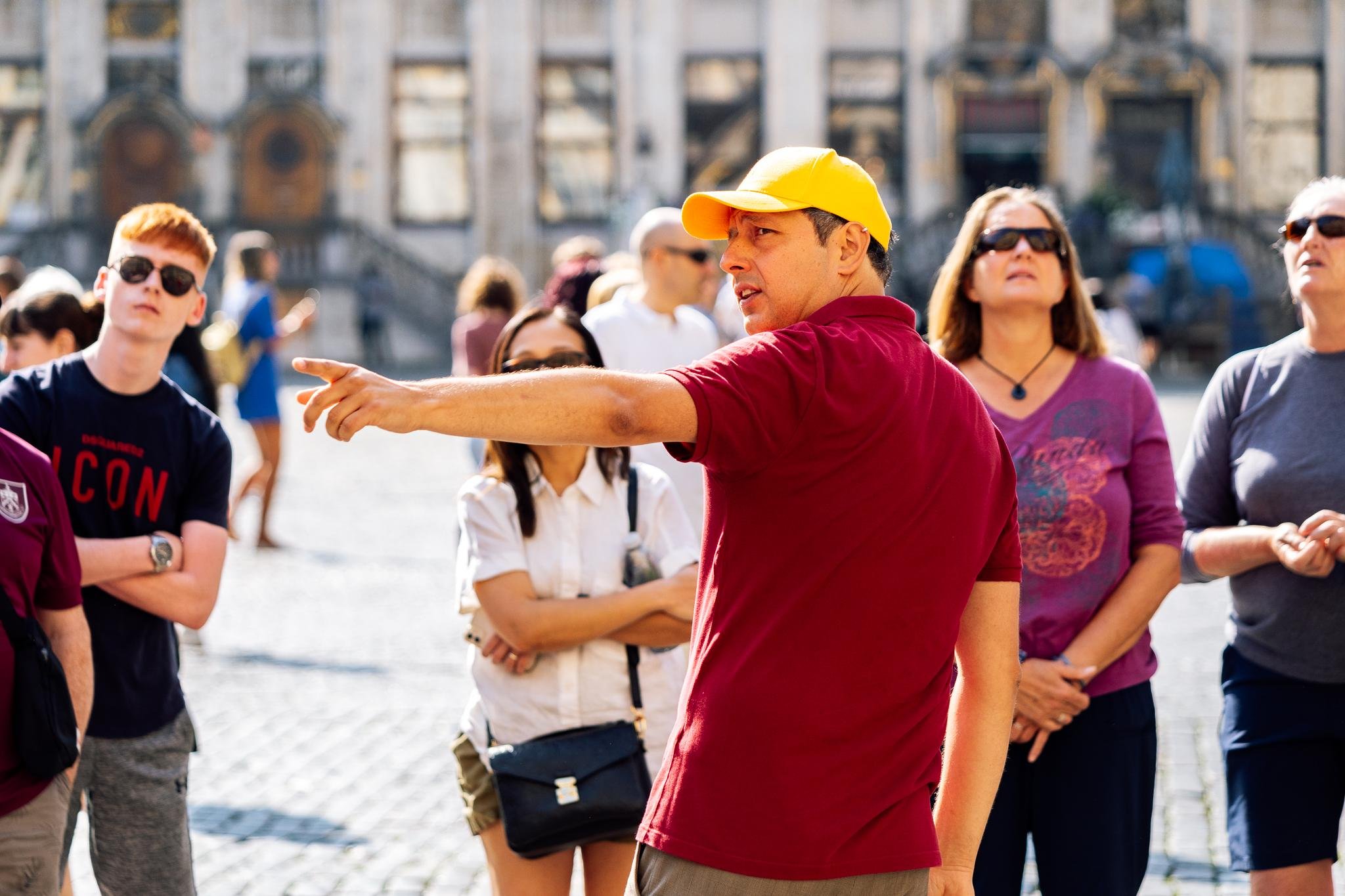
Explore Brussels' iconic landmarks in an intimate small group while savoring authentic Belgian treats
Reserve
2 hr 30 min
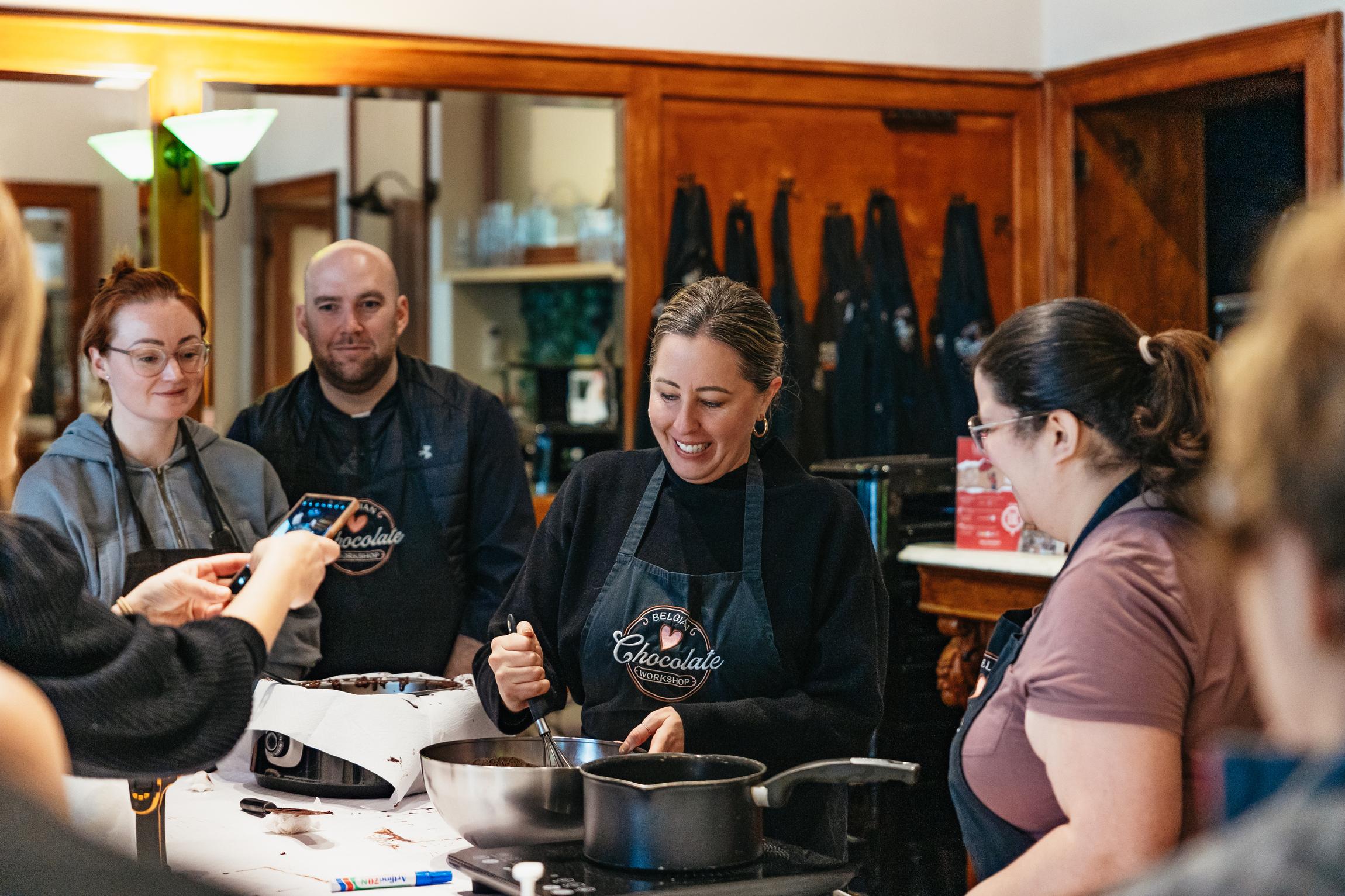
Craft over 30 handmade Belgian chocolates in this hands-on 2.5-hour workshop with tastings included
ReservePrices from verified partners. Availability updates in real time at checkout. Free cancellation policies apply where shown.
The landmarks, rooms, and views travelers on this tour remember — all visible on a single visit.
Trace the journey of cocoa from ancient Mayan plantations to European chocolate houses.
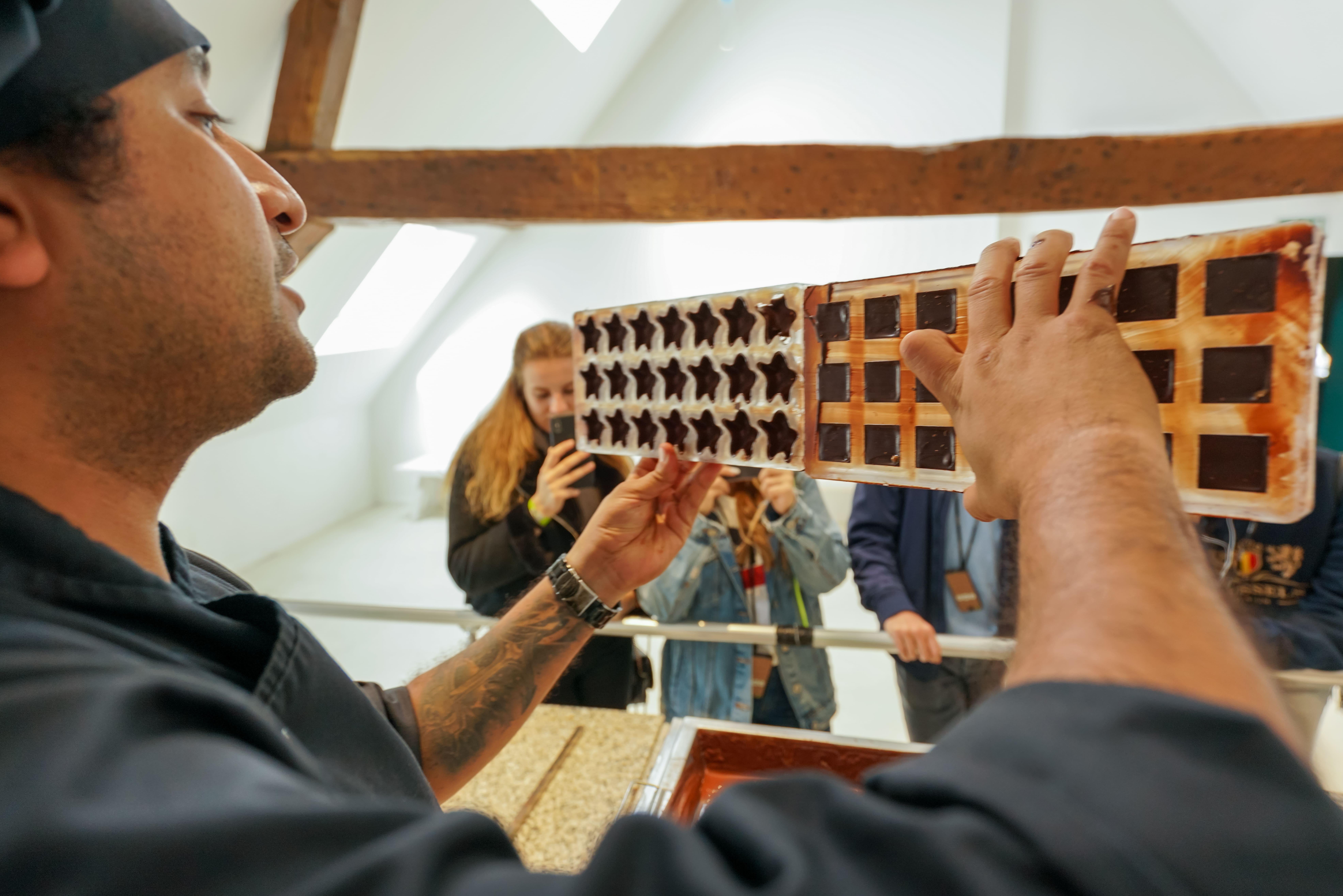
Watch a master chocolatier craft traditional Belgian chocolates by hand.
Sample various artisanal chocolates and learn about flavor profiles.
Explore a vast array of antique chocolate molds from centuries past.
Learn the step-by-step process of transforming beans into chocolate bars.
The Choco-Story Museum provides a structured, educational deep dive into cocoa production, whereas walking tours offer a broader perspective by pairing confectionary samples with city landmarks. Visitors seeking in-depth knowledge of Belgian cocoa heritage prefer the museum, while those wanting to combine treats with a city stroll should book brussels chocolate tasting tours.
| Feature | Top pick Choco-Story Museum | Historical Walking Tour |
|---|---|---|
Content Focus |
Museum exhibits and cocoa processing | City highlights with food pairings |
Weather Dependency |
Indoors - weather independent | Outdoors - weather dependent |
Physical Exertion |
Minimal - standing and walking | Moderate - extensive city walking |
Atmosphere |
Educational and controlled | Social and immersive |
Accessibility |
Wheelchair accessible | Varies by route |
Group Size |
Self-paced or small groups | Large tour groups |
| See tickets → |
Verdict: Choose the museum for a focused, climate-controlled experience, or select the walking tour if you prefer using brussels chocolate tasting tickets to explore the city's streets while you snack.
Choose your ticket, select your date, and reserve in under two minutes. Secure checkout handled by our verified partner.
Instant confirmation by email, with a mobile voucher you can save offline. No printing, no queuing at a collection desk.
Arrive at the entrance, show your voucher on your phone, and walk in. Most tickets include priority or skip-the-line access.
Practical details for your visit straight from our verified partners — hours, access, rules, and how to get there.
Casual attire is recommended. Please wear comfortable shoes as the visit involves walking through the museum galleries.
Bulky bags are prohibited inside the exhibition area. A small open cloakroom is provided, but leaving items is at your own risk.
Personal photography is generally allowed in most exhibits. Please respect staff instructions near the demonstration area.
The museum is wheelchair accessible, though some areas may require assistance. Please contact the team for specific mobility needs.
Mobile phones are permitted for personal use. Please keep noise levels respectful for other visitors.
The museum is family-friendly. Strollers are not permitted in the exhibition areas; visitors are advised to use a baby carrier.
Outside food and drinks are not allowed. Your visit includes artisanal chocolate tastings as part of the experience.
Pets are not allowed inside the museum, except for registered guide dogs.
The museum provides an audio guide to enhance your brussels chocolate tasting tour experience. Ensure you arrive within the recommended window to fully explore all exhibits.
Best time to go, insider tips, nearby landmarks, and the cancellation fine print — flip through to skim what matters to you.
Flexible, no hidden fees.
Full refund available for cancellations made at least 24 hours in advance. This applies to all brussels chocolate tasting tickets.
Belgium produces 220,000 tonnes of chocolate each year — more per capita than any nation on earth — yet the praline, its signature confection, was invented not in Brussels but by a Swiss immigrant in 1912. Jean Neuhaus II, working above his grandfather's pharmacy at the Galeries Royales Saint-Hubert, replaced liquid medicinal centers with ganache and coined the term. Within a decade, Brussels had become synonymous with shell-molded luxury, a reputation sustained by guild-style apprenticeships and a national standard that mandates 35 percent cocoa solids in all products labeled "Belgian chocolate." Today, Brussels chocolate tasting experiences occupy a spectrum from museum-anchored education to production-floor immersion. The Choco-Story Brussels museum, housed in a 17th-century building on Rue de l'Etuve, traces cacao's journey from Mesoamerican currency to European commodity through pre-Columbian grinding stones, colonial-era molds, and Art Nouveau packaging. Its audio-guided circuit concludes with a tasting of seven praline styles — ganache, gianduja, marzipan, caramel, fruit pâte, liqueur-filled, and nut clusters — each representing a distinct technical lineage. Entry includes access to the rooftop tempering demonstrations, where visitors observe the crystallization process that gives Belgian chocolate its characteristic snap. Workshop formats range from two-hour bean-to-bar sessions, where participants crack Ecuadorian pods and stone-grind nibs into paste, to advanced three-hour praline courses led by certified chocolatiers. These workshops teach shell molding, ganache emulsification, and the physics of tempering curves — skills codified by Brussels' chocolate guilds since the 1950s. Unlike walking tours that combine chocolate with waffles or beer, tasting-focused experiences isolate terroir, roast profiles, and conching durations, training the palate to distinguish single-origin Venezuelan from blended West African couverture. The city's concentration of artisan ateliers — Neuhaus, Godiva, Leonidas, and Pierre Marcolini all maintain production facilities within three kilometers of the Grand-Place — ensures that Brussels chocolate tasting sessions work with same-day batches rather than shelf-stable imports. September through November brings the annual Salon du Chocolat, when master chocolatiers unveil experimental ganaches infused with saffron, yuzu, and fermented koji. This period also marks the start of praline season, when cooler temperatures stabilize ganache fillings and extend shelf life from two weeks to six. For visitors seeking technical depth over souvenir sampling, Brussels offers a rare concentration of tasting experiences that treat chocolate as both craft tradition and living artisan practice.

"Belgium mandates 35 percent cocoa solids in all products labeled 'Belgian chocolate' — a national standard that has defined Brussels' reputation since 1912."
A step-by-step walkthrough of the visit — what you'll see, how long each stage takes, and the details that matter.
You arrive at Rue de l'Etuve by mid-morning, when the museum's tempering room is in full production and the scent of roasted cacao drifts into the street. After collecting your audio guide at the 17th-century entrance, you climb two flights to the colonial trade gallery, where 19th-century lithographs show cacao processing in the Belgian Congo. The circuit winds through rooms displaying hand-painted molds, pneumatic enrobing machines, and a working conche from 1923. At the tasting station, you sample seven pralines in sequence — the guide prompts you to let each melt on your tongue rather than chew, isolating the snap of the shell, the texture of the ganache, and the finish of single-origin couverture. In the adjacent workshop space, you don an apron and receive a tray of tempered dark chocolate, a piping bag of hazelnut gianduja, and a silicone mold grid. The chocolatier demonstrates the two-pour method: coating the mold, inverting to drain excess, chilling to set the shell, piping the filling, and sealing with a final chocolate layer. You repeat the sequence, learning to detect the slight resistance that signals proper crystallization. By the time you unmold your pralines — twelve glossy shells with clean edges — you understand why Belgian chocolatiers guard their tempering curves. You leave with a takeaway box and a recalibrated sense of what constitutes a well-made confection.
Choco-Story Brussels is open daily from 10:00–17:00.
Yes, the museum is accessible, though we recommend contacting staff for assistance with specific mobility needs.
Large bags are prohibited; however, a small cloakroom is available at Choco-Story Brussels.
Yes, personal photography is allowed in most areas, provided you follow staff instructions during demonstrations.
We recommend booking in advance, especially for weekends, to secure your preferred slot for a brussels chocolate tasting.
Casual, comfortable clothing and walking shoes are recommended for your visit to the museum.
Outside food and drinks are not permitted, but the museum includes chocolate tastings in the entrance fee of 14 EUR.
The museum is located at Rue de l'Etuve 41; it is easily accessible via public transport near the city center.
Yes, children are welcome at Choco-Story Brussels, though they should be accompanied by an adult.
You can receive a full refund if you cancel your brussels chocolate tasting tour at least 24 hours in advance.
You can easily visit the nearby Manneken Pis statue and the Grand Place after your museum tour.