
English| EUR
Suggested for you
More currencies
Choose a language
Belgium's chocolate fame rests on centuries of technical innovation and uncompromising quality standards. This guide explains the historical milestones, artisan techniques, and regulatory framework that distinguish Belgian chocolate from mass-produced confections worldwide.
Quick answer
Why is chocolate famous in Belgium? The country earned its reputation through four centuries of innovation—including the 1912 invention of the filled praline by Jean Neuhaus—combined with strict national regulations requiring minimum cocoa percentages and the preservation of small-batch artisan methods. Over 2,000 chocolate shops operate across Belgium today, more per capita than anywhere else on Earth, maintaining hand-crafted traditions that industrial producers abandoned decades ago.
Cacao beans first arrived in the Spanish Netherlands during the early 1600s, but Belgium's chocolate identity crystallized in Brussels during the late 19th century when Swiss-trained chocolatiers established ateliers near the royal palace. The watershed moment came in 1912 when pharmacist Jean Neuhaus invented the praline—a chocolate shell with soft ganache filling—and simultaneously created ballotin packaging to transport the delicate confections. This technical breakthrough separated Belgian chocolate from solid-bar competitors and established the country's reputation for innovation. Belgian chocolate regulations prohibit vegetable fats, require minimum cocoa butter percentages, and mandate that ganache fillings use fresh cream rather than shelf-stable substitutes. These rules, enforced since the 1920s, protected artisan quality while European neighbors industrialized. Master chocolatiers still temper chocolate by hand on marble slabs, a time-intensive process that controls crystal formation and produces the characteristic snap and sheen that machines cannot replicate consistently. The concentration of expertise explains why is chocolate famous in Belgium beyond its historical innovations. Brussels alone hosts over 500 chocolate shops within 32 square kilometers, creating competitive pressure that drives continuous refinement. The Belgian Chocolate Code, established in 2007, certifies only products made entirely within Belgium using traditional methods, preventing dilution of the designation. Visitors to the Belgian Chocolate Village museum on Rue de Neck can observe these techniques firsthand, watching chocolatiers demonstrate tempering, molding, and hand-finishing processes that remain unchanged since the early 20th century. The museum operates Wednesday through Friday from 09:00 to 18:00 and weekends with slightly adjusted Saturday hours, providing context for understanding Belgium's chocolate supremacy through both historical exhibits and live production demonstrations.
“The 1912 invention of the filled praline gave Belgium a technical advantage that industrial producers still cannot replicate at scale.”
The international reputation of Belgian chocolate is built upon a foundation of strict quality regulations and pivotal innovations in confectionery history. These developments transformed chocolate production into a craft defined by precision and high-quality ingredients.
Belgium implemented legislation in 1884 to prevent the adulteration of chocolate, mandating a minimum of 35% pure cocoa. This regulation established a high standard for quality that persists in the industry today.
Jean Neuhaus invented the praline in 1912, creating the first chocolate shell filled with a soft center. This innovation shifted the focus from solid chocolate bars to refined, filled confectioneries.
Belgian manufacturers traditionally emphasize the use of 100% cocoa butter rather than vegetable fats in their recipes. This practice ensures a smooth texture and a rapid melt-point that is characteristic of premium chocolate.
Belgium gained early access to high-quality cocoa beans through its colonial ties with the Congo in the late 19th century. This supply chain allowed local chocolatiers to experiment with ingredients on a larger scale than many of their European neighbors.
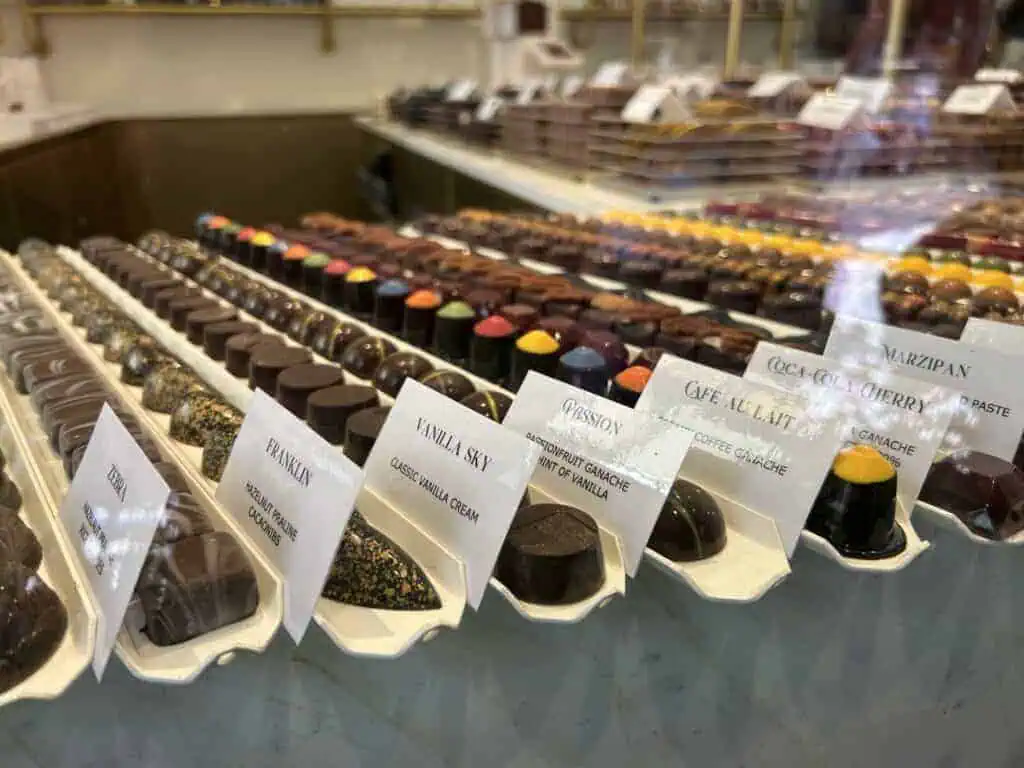
The industry maintains a strong tradition of small-batch production, with many chocolatiers continuing to temper chocolate by hand. This focus on artisanal techniques helps preserve the flavor profile and quality associated with the Belgian label.
The Belgian Chocolate Village is open from Wednesday through Sunday, with closed days on Mondays and Tuesdays.
The Belgian Chocolate Village is located at Rue de Neck 20, 1081 Koekelberg, Brussels. It is easily accessible via the Brussels public transport network.
Line 2 or 6 to Simonis station
Line 9 to Broustin stop
Line 14 or 20 to Broustin stop
Access via Rue de Neck
Arrive between 09:00 and 17:30 to avoid afternoon crowds and ensure sufficient time for the museum tour.
To understand why chocolate is famous in Belgium without the interference of large groups, the best arrival window is between 09:00 and 17:30. Arriving early allows for a thorough exploration of the exhibits at a steady pace.
—
Visiting mid-week ensures the quietest environment for viewing exhibits. You can move through the collection without waiting for space.
—
Popular times often see an increase in guests, which may limit your time at specific displays. Arriving early on these days is advised to manage the influx.
Mild temperatures, 10–18°C
These shoulder seasons offer comfortable weather for traveling to the museum. Visitor numbers are generally lower than during the peak summer holiday months.
Verdict: The best slot for your visit is Wednesday or Thursday at 09:00 during the months of April or October.
Everything you need to know about why is chocolate famous in belgium
The reputation of the country is built on strict quality control laws, high cocoa butter content, and traditional manufacturing methods. Understanding why is chocolate famous in belgium involves looking at the history of artisanal workshops that have perfected the bean-to-bar process over generations. Many visitors explore why is chocolate famous in belgium by experiencing these authentic production techniques firsthand. Consequently, the heritage of fine confectionery has turned this nation into a global reference for sweet enthusiasts.
Belgian pralines are defined by their smooth, tempered shells filled with varied ganache or nut-based centers. This meticulous craftsmanship ensures that each piece offers a distinct balance of texture and flavor that defines why is chocolate famous in belgium. It is this dedication to quality that keeps the local industry at the forefront of global pastry arts.
To avoid large crowds and enjoy a relaxed atmosphere, the best arrival window is 09:00–17:30. Arriving early during these hours ensures you have sufficient time to explore the exhibits properly. Checking the museum schedule helps you plan your visit around peak tourist times.
The standard adult entry fee for an individual visit is 8 EUR. You can find more details regarding logistics and guided experiences on the official website. This fee provides access to the full range of historical and production exhibits housed at the facility.
Yes, the museum offers an educational and sensory experience that appeals to all ages. Children can learn about the origins of cocoa and the evolution of the industry in a welcoming environment. It serves as an informative stop for families traveling through Brussels.
The popularity stems from the use of pure, high-quality cocoa butter and adherence to traditional recipes that prohibit the use of vegetable fats. This focus on ingredient purity distinguishes the local product from mass-produced alternatives found elsewhere. Master chocolatiers prioritize flavor profiles that celebrate the richness of the raw beans.
The museum is located at Rue de Neck 20, 1081 Koekelberg, Brussels. You can reach this destination via public transport or car. Please verify your specific route and arrival time against the current local transit schedules.
Brussels Chocolate Factory Tours
Read more GuideBest Brussels Chocolate Shops
Read more Tickets & toursBrussels Chocolate Tasting Tour
Read more GuideBrussels Chocolate Tour for Kids
Read more Tickets & toursBrussels Chocolate Tasting
Read more Tickets & toursBrussels Chocolate and Beer Tours
Read more